Cybersecurity 2025
Why Cybersecurity is Essential for Every Business in 2025
In today’s digital-first world, running a business without connected systems is nearly impossible. From client data to online transactions, everything depends on the internet.
However, this convenience comes with a cost — cyber threats are increasing rapidly, and without a strong cybersecurity strategy, every organization is at risk.
Global Rise in Cyberattacks
- In 2024, over 2,000 ransomware attacks occurred daily worldwide.
- Around 78% of Indian businesses faced at least one cyber incident.
- Small and Medium Enterprises (SMEs) remain the most vulnerable targets.

Top Cyber Threats in 2025
Cyber threats in 2025 have become smarter, AI-powered, and harder to detect. Hackers now use advanced tools like Deepfakes, Voice Cloning, and Targeted Ransomware. Let’s explore the most dangerous types of attacks this year.
The Best Indigenous Alternative to Chrome
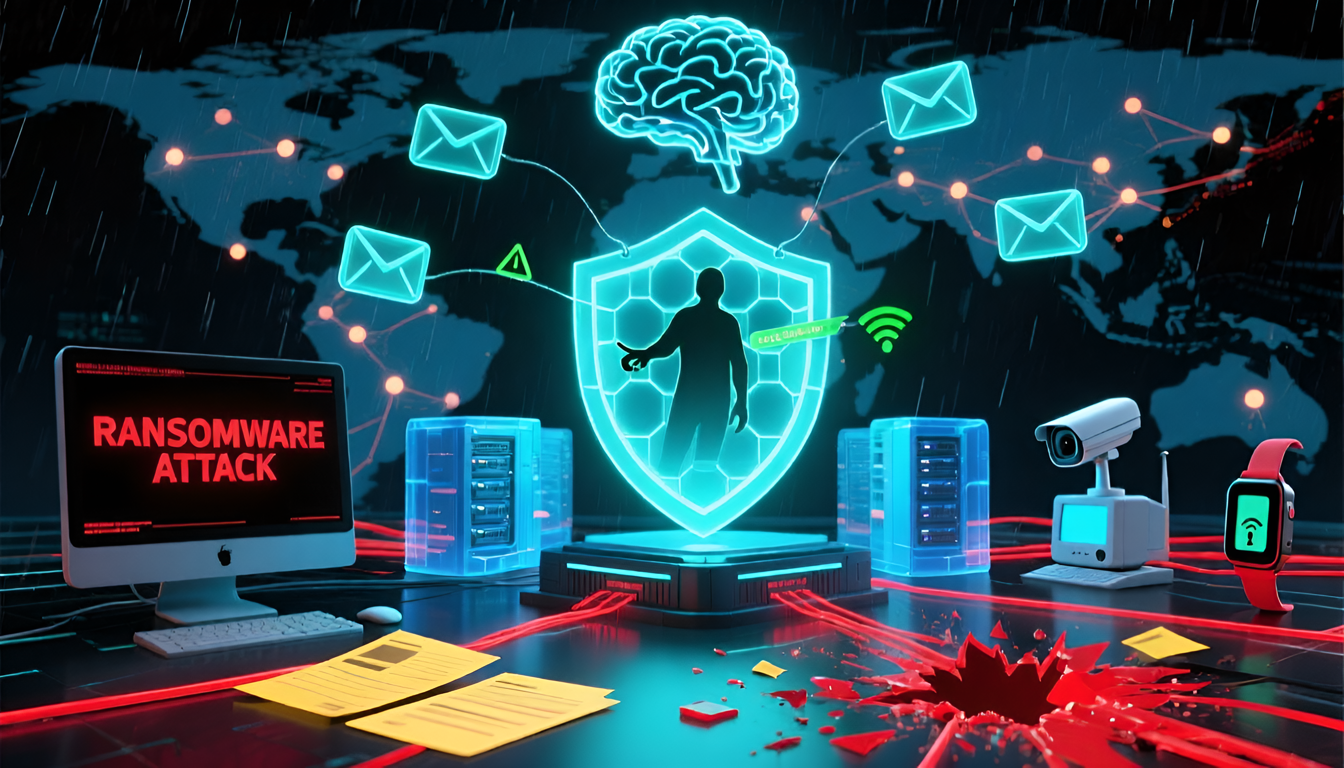
1. Ransomware Attacks
Ransomware locks your system files and demands payment (usually in cryptocurrency like Bitcoin or Monero) to release them.
How it Happens:
- Malware enters through phishing emails or fake software downloads.
- It encrypts all files, blocking user access.
- A “ransom note” appears demanding payment to unlock the data.
Real Examples:
- AIIMS Ransomware Attack (India, 2023): Patient records were locked, halting services.
- Colonial Pipeline Attack (USA, 2021): Crippled fuel supply across the U.S.
Prevention Tips:
- Take regular offline and cloud backups.
- Use anti-ransomware tools like Sophos or Bitdefender.
- Conduct employee awareness training to detect suspicious links.
- Implement a Zero Trust security policy for user access control.
2. Phishing Attacks
Phishing tricks users into revealing sensitive information like passwords, OTPs, or credit card details by pretending to be a trusted entity.
Common Types:
- Email Phishing: Fake bank or company emails.
- Spear Phishing: Targeting specific individuals or organizations.
- Smishing: Fraud through SMS links.
- Vishing: Fake verification calls asking for confidential data.
Examples:
- Fake Paytm and SBI SMS scams in India (2024) stole millions.
- An IT employee lost server access after a phishing email.
Prevention Tips:
- Always verify website URLs before logging in.
- Enable anti-phishing filters in Gmail or Outlook.
- Never share OTP or passwords over calls or emails.
- Organizations should use DMARC, SPF, and DKIM for email security.
Top Cyber Threats & Powerful Protection Tips 2025 in Telugu
3. IoT Hacking (Internet of Things)
Smart devices like cameras, routers, smart TVs, and wearables are easy targets for hackers if left unsecured.
How it Happens:
- Devices with default passwords are easy to compromise.
- Once hacked, attackers can infiltrate entire networks.
- Compromised devices can be turned into botnets for large-scale attacks.
Examples:
- Mirai Botnet (2024): Infected thousands of IoT devices worldwide.
- Smart CCTV hacks in Indian cities exposed private video feeds.
Prevention Tips:
- Use unique strong passwords for every device.
- Keep firmware updated regularly.
- Create a separate network for IoT devices.
- Disable unused ports and services.
4. Data Breaches
A data breach occurs when confidential company or personal data is stolen or leaked. It causes reputational, financial, and legal damage.
How it Happens:
- Hackers gain access to servers or cloud storage.
- Sensitive data is copied or sold on the dark web.
- Sometimes insiders are responsible for leaks.
Examples:
- Aadhaar Data Leak (India, 2023): 815 million records exposed.
- Facebook, LinkedIn, and Canva have faced similar breaches.
Prevention Tips:
- Use data encryption to protect sensitive information.
- Enforce access control with minimal privileges.
- Conduct regular security audits.
- Have an Incident Response Plan (IRP) ready.
- Comply with India’s DPDP Act 2023 for data protection.
Emerging Cyber Threat Trends (2025)
Cybercrime is evolving beyond traditional attacks. New threats include:
- AI-generated Deepfakes
- Voice Cloning Frauds
- Supply Chain Attacks via third-party vendors
- Crypto-jacking – hidden crypto mining on infected systems
Cyber defense today requires more than antivirus software — it demands a multi-layered, proactive strategy combining technology and awareness.
Zero Trust Architecture: “Never Trust, Always Verify”
The Zero Trust model is the future of enterprise security. It works on the principle that no one — inside or outside — should be trusted automatically.
Core Principles:
- Continuous Verification of every user, device, and request.
- Least Privilege Access – give only required permissions.
- Micro-segmentation – isolate networks to contain breaches.
- Multi-Factor Authentication (MFA) for all critical systems.
Why Adopt Zero Trust?
- Prevents internal network breaches.
- Works efficiently with Cloud and Remote Work setups.
- Now being adopted not only by enterprises but also by SMEs.
AI/ML-Based Security Solutions – The Future of Defense
AI and Machine Learning are transforming cybersecurity in 2025. These tools detect anomalies faster than humans and respond automatically.
AI Applications in Security:
- Threat Detection & Analysis from massive log data.
- Behavioural Analytics to flag unusual activities.
- Automated Incident Response to neutralize attacks.
- Predictive Intelligence to anticipate future threats.
Top AI Security Tools (2025):
- CrowdStrike Falcon – Endpoint protection
- Darktrace AI – Network threat analytics
- Microsoft Defender XDR – Integrated digital defense
- SentinelOne – AI-powered automated response
Cyber Protection for Individuals & Small Businesses
Cybersecurity isn’t just for big corporations — individuals and small businesses are frequent targets too.
For Individuals:
- Use strong, unique passwords and change them often.
- Use password managers (e.g., Bitwarden, 1Password).
- Enable Two-Step Verification (MFA).
- Avoid logging in over public Wi-Fi.
- Keep all software and devices updated.
For Small Businesses:
- Deploy Endpoint Security Solutions.
- Maintain regular data backups and a disaster recovery plan.
- Provide employee phishing awareness training.
- Use firewalls and network monitoring tools.
- Encrypt sensitive data.
Security Innovations to Watch in 2025
As technology evolves, so do defense mechanisms. Here are the top trends shaping cybersecurity in 2025:
- AI-driven Self-learning Firewalls
- Quantum Encryption – unbreakable data protection
- Blockchain Security – supply chain and identity safety
- Zero Trust Cloud Infrastructures
- Cyber Insurance Integration – mitigating business risks
National Cybersecurity Policy 2025 – India’s Future Roadmap
India is preparing its National Cybersecurity Policy 2025, focusing on:
- Government–Private sector collaboration
- Public cybersecurity awareness drives
- Incentives for cybersecurity startups
With technologies like AI, IoT, 5G, and Quantum Computing, the cybersecurity landscape will enter an entirely new era.
Frequently Asked Questions (FAQs)
- How to start building Cyber Resilience?
- Prioritize data protection and regular backups.
- Set up antivirus, firewall, and staff training.
- Consult a certified cybersecurity expert for audits.
- What to do after a hacking incident?
- Immediately disconnect the internet.
- Inform your IT team or Cyber Cell.
- Recover data from secure backups.
- Report to CERT-In (India’s Cyber Emergency Response Team).
- How strong is cybersecurity among Indian businesses?
- Large enterprises are well-secured, but SMEs still lag in defence strategies.
- However, government awareness programs are improving the situation.
Conclusion
In 2025, cybersecurity is not just a technology it is the foundation of business sustainability.
Every individual and organization must take responsibility for digital safety.
Key Takeaways:
- Implement Zero Trust Architecture
- Adopt AI-powered security solutions
- Maintain regular backups and employee training
- Promote cyber awareness across teams